Microsoft Build: New AI Models and Agents Signal Strategic Shift from OpenAI
Microsoft unveils in-house reasoning models and AI agents at its annual conference, asserting independence in its partnership with OpenAI.
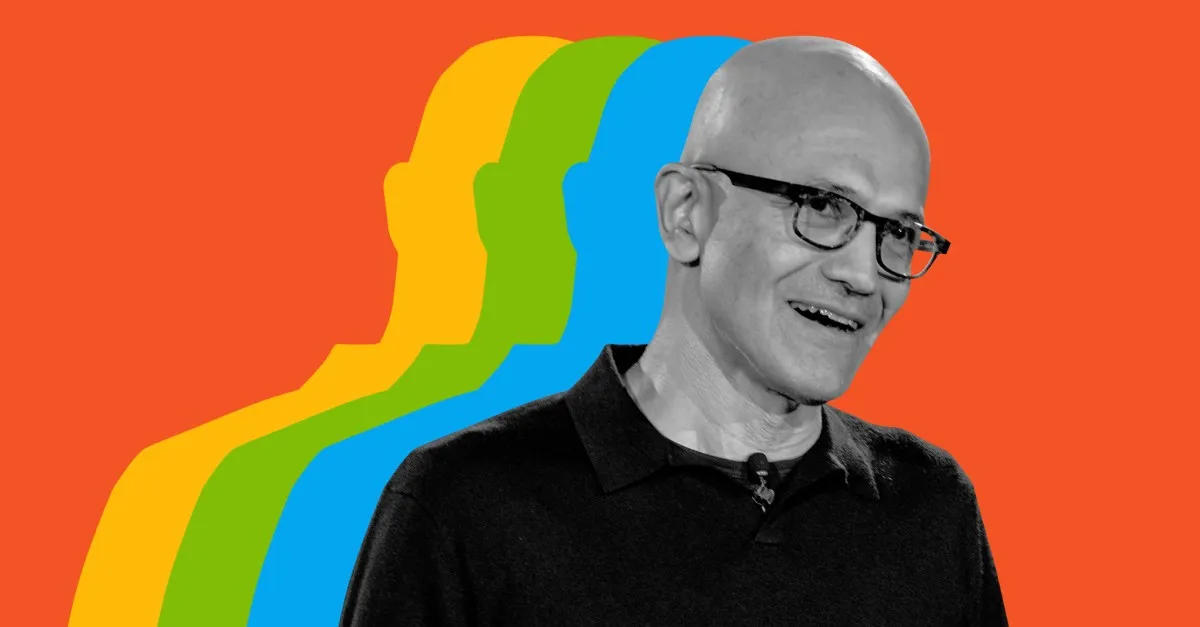
Microsoft and OpenAI have officially entered the "it's complicated" phase of their multi-billion dollar relationship.
At the annual Build 2026 conference, the tech giant signaled a massive shift in its artificial intelligence strategy.
The message was clear: Microsoft is finally ready to build its own future.
Proving they can build from the ground up
> "The goal is to prove that we can become one of the top four labs in the world."
For years, Microsoft relied heavily on its exclusive partnership with OpenAI to lead the market.
That dynamic changed on Tuesday when AI chief Mustafa Suleyman took the stage to announce a new direction.
According to The Verge, the company is moving toward total independence.
Suleyman, a co-founder of Google DeepMind, joined Microsoft to transform its internal capabilities.
He noted that while Google DeepMind, OpenAI, and Anthropic are the current leaders, Microsoft intends to join them.
To achieve this, the company must prove it can develop frontier models without outside help.
This shift follows a period of internal drama that saw the two partners effectively separate in late April.
While Microsoft remains the primary cloud provider for OpenAI, the competitive gloves are now off.
The arrival of MAI-Thinking-1
One of the biggest reveals at Build was the introduction of MAI-Thinking-1.
This is the company’s first high-level reasoning model developed entirely in-house.
Reasoning models are designed to handle complex logic and multi-step problem-solving.
This puts Microsoft in direct competition with OpenAI’s most advanced offerings.
But MAI-Thinking-1 was just the beginning of a much larger model rollout.
Suleyman unveiled six other specialized models during his presentation:
- Vision: Advanced image recognition and generation
- Voice: Natural language processing with high emotional intelligence
- Transcription: Real-time, multi-language audio conversion
- Coding: Specialized tools for software development automation
- Enterprise: Models optimized for corporate data security
- Mobile: Lightweight versions for on-device processing
As Microsoft reports, these tools are designed to give developers more choice.
By building its own stack, the company reduces its reliance on third-party API costs.
It also allows for tighter integration within the Windows and Azure ecosystems.
The rise of autonomous AI agents
Microsoft isn't just building models; it's building a new way to work.
The company announced a suite of AI agents that can perform tasks autonomously.
These agents are designed to act like digital employees rather than simple chatbots.
They can manage emails, schedule meetings, and even handle complex procurement workflows.
This move mirrors efforts seen at companies like Google and Facebook.
The goal is to create a "super app" that serves as a central hub for all AI interactions.
A new era of cybersecurity
Security was another major pillar of the Build 2026 announcements.
Microsoft introduced a new cybersecurity tool powered by its internal reasoning models.
This tool can detect threats and suggest patches before a human analyst even notices a breach.
> "We have to prove that we can do everything that we need to from the ground up."
This statement from Suleyman highlights the company's new rigorous approach to safety.
By owning the model, Microsoft can implement safety guardrails at the architecture level.
This provides a level of control that was previously impossible with third-party systems.
Navigating the competitive landscape
The AI market is becoming increasingly crowded and expensive.
As The Verge points out, the partnership with OpenAI was always a temporary bridge.
Microsoft needed OpenAI to catch up to Google's early lead in deep learning.
Now that Microsoft has the infrastructure and the talent, it no longer needs a crutch.
CEO Satya Nadella described the current era as a time of "great change."
He emphasized that developers must come to grips with new opportunities.
Those opportunities now lie in Microsoft's own proprietary technology stack.
The battle for developers
For developers, this strategic shift means more tools but also more complexity.
They must now decide whether to stick with OpenAI's ecosystem or migrate to Microsoft's native models.
Microsoft is betting that its deep integration with Azure will win them over.
Pricing and availability
MAI-Thinking-1 will primarily target enterprise clients at launch.
Specific pricing tiers were not fully disclosed, but the company promised competitive rates.
The goal is to make high-level reasoning affordable for businesses of all sizes.
The bottom line
Microsoft is no longer content to be the silent partner in the AI revolution.
By launching MAI-Thinking-1 and its own agent framework, it has declared independence.
This is a bold gamble that could redefine the power balance in Silicon Valley.
Which of these new models will you integrate into your workflow first?
The age of the AI partnership is ending, and the age of AI competition has begun.
Source: Newsletter IA
AI Benchmark
Compare GPT, Claude, Gemini and more: pricing, speed and benchmarks.